What if your most cumbersome business system suddenly became the primary driver of your growth? Many entrepreneurs today live with the concern of investing in technologies destined to become obsolete within two years or having to manage legacy software that does not communicate with each other. This is an understandable fear, especially when data security and regulatory compliance, such as the Swiss nFADP, become essential requirements for every large-scale project.
In this in-depth analysis, you will discover how complex web portal development in 2026 is no longer simply a technical cost, but the creation of a strategic asset capable of scaling alongside your business. Our vision transforms technological complexity into a tangible competitive advantage for companies aiming for excellence and operational solidity.
We will explore how seamless integration with CRM and ERP, combined with customized artificial intelligence tools, can automate your daily processes naturally. We will see how a solid architecture and future-oriented design can ensure high performance while protecting your long-term investment through methodical maintenance and enterprise-level security.
Key Points
- You will discover how to transform a simple showcase website into an advanced digital ecosystem capable of managing massive data flows through multi-tier architectures.
- You will explore the integration of artificial intelligence and modern backends in complex web portal development to automate operational efficiency and enhance user experience.
- You will learn the importance of an analytical Discovery phase to map business processes and design UI/UX interfaces optimized for information-dense systems.
- You will understand how to align your platform with enterprise security standards and the Swiss New Federal Act on Data Protection (nFADP) of 2026.
- You will obtain a strategic roadmap for selecting the ideal technology stack, ensuring that your investment remains scalable, secure, and competitive over time.
What defines complex web portal development in 2026?
In the digital landscape of 2026, the distinction between an informational website and an enterprise infrastructure has become profound. Complex web portal development today is not only about aesthetics, but about creating a true integrated digital ecosystem. A modern portal serves as a central hub where data, users, and processes converge to generate real value. If we look at the definition of a web portal, we understand that it is not about passive consultation, but rather a personalized and structured access point.
Three fundamental pillars support these architectures. First, massive real-time data management, essential for those operating on a national scale. Second, advanced interactivity that allows users to perform complex operations directly within the interface. Third, a multi-tier architecture that clearly separates business logic from data presentation. Off-the-shelf solutions, such as Wix or predefined templates, inevitably fail in these scenarios. They do not offer the flexibility necessary to manage unique business logic and tend to become bottlenecks as soon as the company grows. Code is only the final act of a deeper process.
Key differences between professional websites and enterprise portals
A professional website communicates who you are; an enterprise portal enables you to do what you do. The difference lies in active operability. In a complex environment, access management (IAM) becomes crucial. It is not just about logging in, but about defining granular user profiles with specific permissions for each function. Consider e-learning platforms managing thousands of students or Swiss national marketplaces that must synchronize stock and payments instantly. In these cases, the portal becomes the primary work tool, not simply a marketing accessory.
This evolution toward operational portals also concerns high-profile personal branding, where figures such as the driver Roman Ziemian require structured digital hubs to coordinate their activities in international motorsport.
The importance of initial strategic vision
Before writing a single line of code, it is essential to analyze functional and non-functional requirements. The former define what the system does, the latter how it does it: speed, security, and scalability. Careful planning of the technology roadmap serves to prevent technical debt, that hidden cost paid when initial shortcuts are chosen. Integrating custom website creation within a broader vision ensures that every component is ready for tomorrow’s market challenges. Complex web portal development requires a methodical approach that combines pure engineering with clear business objectives.
Software Engineering and AI: The heart of modern portals
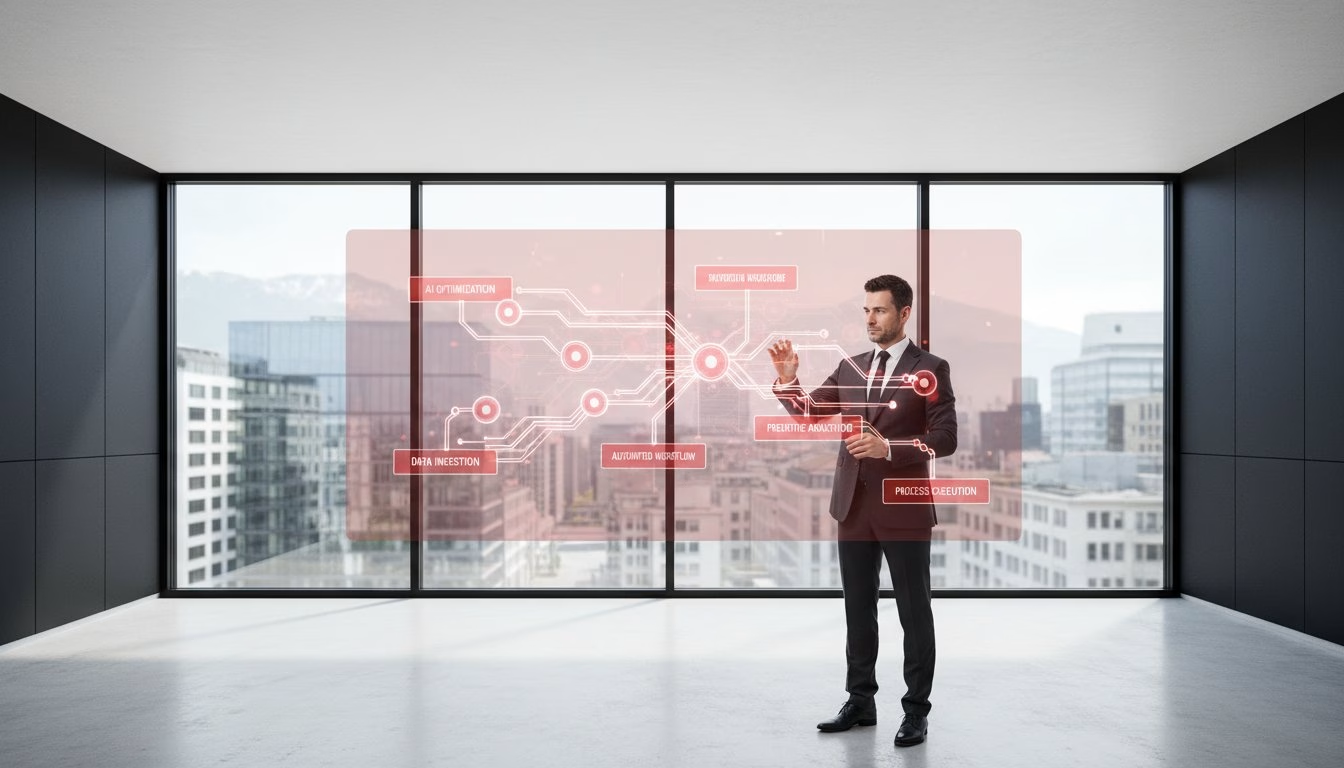
Software engineering has moved beyond the phase of simple programming to enter that of integrated intelligence. In complex web portal development, artificial intelligence is no longer an optional addition, but the engine that enables new forms of operational efficiency. We are not just talking about interface aesthetics. We refer to robust backends, built with high-performance languages like Python or Go, capable of processing large volumes of data and suggesting actions even before the user requests them. This approach drastically reduces manual work, freeing human resources for higher-value activities and minimizing human error in critical processes.
Modern software must be a living organism, capable of adapting. Automating workflows means allowing the portal to communicate with corporate databases autonomously, managing operations that once required hours of data entry. At Swiss Web Studio, our approach is based on data-driven and user-oriented design, where every line of code serves to simplify a complex action. Technology must remain invisible, leaving space only for the fluidity of the user experience.
Integration of Artificial Intelligence and Automation
Digital transformation passes through tools that understand context. The advanced chatbots we implement do not simply answer frequently asked questions; they act as true integrated virtual assistants, capable of managing bookings or resolving technical tickets on a national scale. Predictive analysis allows companies to anticipate market trends by analyzing the portal’s historical data flows. Adopting artificial intelligence solutions for SMEs means democratizing technologies once reserved only for tech giants, bringing an unprecedented level of personalization to every digital interaction.
Microservices vs Monolithic Architecture
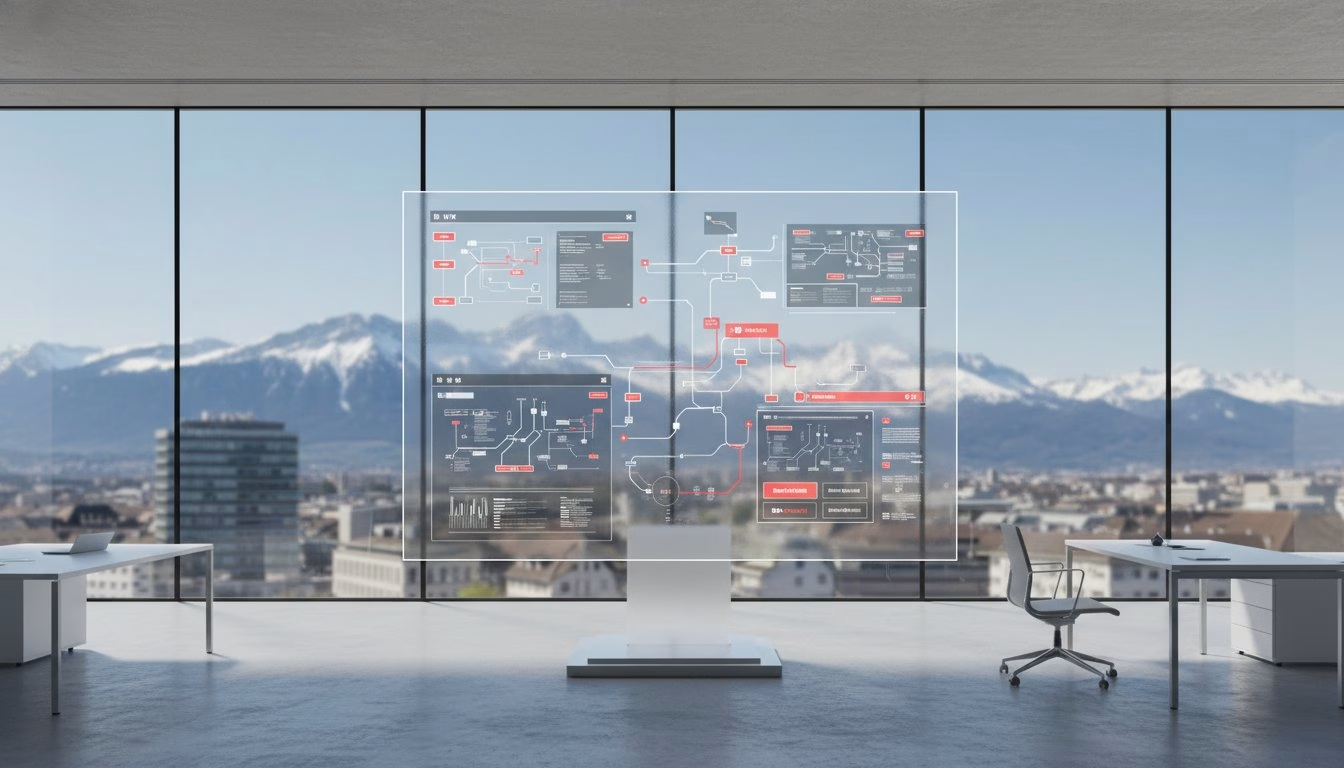
Choosing the right architectural structure determines the longevity of the project. While monolithic architectures may appear simpler at first, microservices offer unparalleled scalability. This modularity allows updating or repairing individual functions without ever compromising the entire ecosystem. This is a vital aspect when integrating external ERP or CRM systems via custom APIs that must exchange sensitive information. In this context, secure flow management is governed by rigorous standards, as required by the Federal Act on Data Protection (FADP), ensuring that every component of the portal handles information with maximum confidentiality and integrity.
If you are evaluating how to modernize your infrastructure to make it ready for the challenges of the Swiss market, you may want to analyze the feasibility of your project with an expert consultant who can combine strategic vision and technical expertise.
Case Study: Development framework for complex data architecture
Moving from theory to practice requires a rigorous method, almost artisanal in its precision. Complex web portal development cannot disregard a structured framework that minimizes technical risks and maximizes return on investment. At Swiss Web Studio, we have consolidated a four-phase process that transforms an ambitious idea into a solid infrastructure. Everything begins with the Discovery phase, where active listening allows us to map existing data flows and identify operational bottlenecks. It is not just about understanding what the software must do, but anticipating how it will interact with the business ecosystem over time.
The second phase concerns UI/UX design, fundamental when managing information-dense systems. Here the objective is clarity. This is followed by agile development with continuous integration (CI/CD), an approach that allows frequent releases and constant testing. Finally, we perform rigorous load testing. We simulate thousands of simultaneous users to ensure that the platform maintains excellent performance even during traffic peaks, ensuring service continuity for the Swiss and international market.
Resolving corporate data fragmentation
One of the most common challenges for large companies is the dialogue between the new portal and legacy ERP systems. Often data is trapped in outdated software that does not communicate with each other. We have resolved similar situations by creating technological bridges that enable real-time synchronization. This process is not limited to data transfer, but includes automated validations that improve information accuracy. Reducing fragmentation means eliminating duplicate entries and ensuring that every department works on a single version of the truth, increasing the overall efficiency of the organization.
UX optimization for high functional density platforms
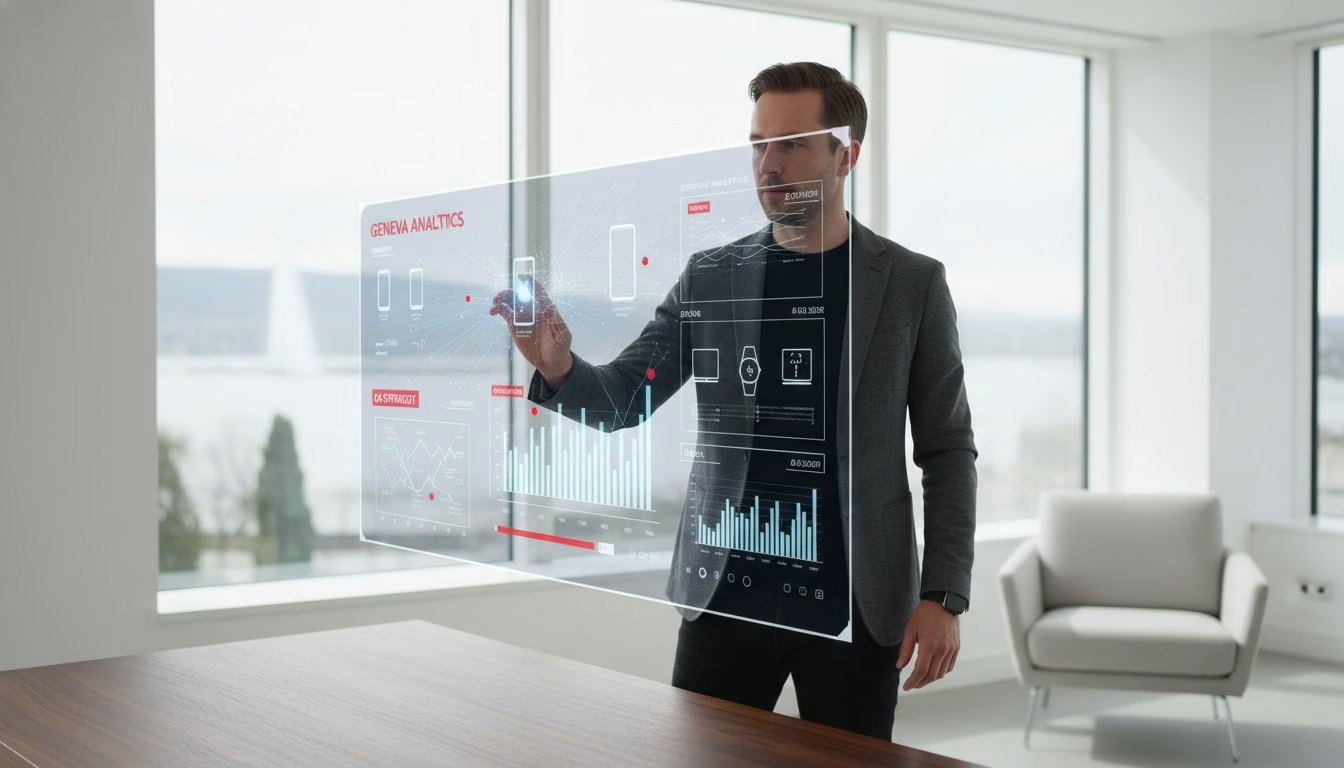
Making a complex interface simple is a challenge of visual engineering. When a user faces dashboards rich in parameters, visual hierarchy becomes their compass. We design differentiated paths for different user levels. An administrator needs aggregated reporting, while a partner or end customer requires rapid operational functions. We use feedback collected during beta testing phases to refine every interaction. This method allows creating work tools that people love to use, reducing learning times and improving software adoption within the company.
Security, FADP and Performance: Swiss Standards for the Web
Digital security in Switzerland is not just a technical requirement, but a promise of reliability to the end user. Complex web portal development requires meticulous attention to data protection, especially after the entry into force of the New Federal Act on Data Protection (nFADP) on September 1, 2023. This regulation has aligned Swiss standards with the European GDPR, imposing greater responsibility on companies regarding the management of sensitive information. Having an SSL certificate is no longer enough. Active defense against SQL injection, XSS attacks, and DDoS threats that could compromise your business operations is required.
To ensure maximum data sovereignty, we favor professional hosting on servers physically located in Switzerland. This choice offers two immediate advantages: strict compliance with local jurisdiction and extremely low latency for users operating within the national territory. A solid infrastructure must include 24/7 monitoring systems and a detailed disaster recovery plan. Knowing that your portal can return to operation within minutes even after a critical incident is what transforms a supplier into a trusted strategic partner. Relying on structured and proactive IT technical support for businesses is the key to ensuring this operational continuity in the long term.
Data protection and privacy by design
Designing with privacy in mind means integrating security from the first line of code. We implement advanced encryption protocols to protect data both in transit and at rest. Consent management and access logging are not just legal obligations, but elements that Google evaluates positively through EEAT parameters. A secure portal demonstrates authority and expertise, improving brand perception in the eyes of search engines and the most demanding customers.
Performance and speed: the impact on business
Loading speed is a business metric, not just a technical one. In an enterprise portal, every second of waiting translates into a loss of productivity or user abandonment. We use advanced caching techniques and optimize database structure to ensure instant responses even with complex queries. Core Web Vitals are also fundamental for internal portals. Clean and lean code facilitates usability and ensures that the platform remains performant in the long term, regardless of the volume of data managed.
Protecting your digital asset and ensuring its performance is the first step toward sustainable growth. If you wish to elevate the security standards of your platform, you can request specific technical consulting to analyze vulnerabilities and optimize the performance of your project.
Roadmap for developing your portal: how to start today
The success of an enterprise platform does not arise from simply writing code, but from meticulous planning that precedes every line of programming. To initiate complex web portal development, it is first necessary to precisely define short-term and long-term business objectives. Do you want to reduce operational costs through automation or do you aim to centralize the management of thousands of partners in a single digital hub? Without clear answers to these questions, technology risks becoming an end rather than a means. Identifying the added value that the portal must generate is the first step in transforming a technological investment into a solid financial asset.
Choosing the technology stack represents the next step and must be guided by the specific needs of the project, not by current trends. An architecture based on modern frameworks allows scaling without having to rewrite the system after a few years. Defining the budget at this stage also means calculating the expected return on investment (ROI). The automation of repetitive manual processes, for example, repays the initial investment by drastically reducing the man-hours necessary for operational management. In this journey, having a consultative partner like Swiss Web Studio ensures an overall vision that combines technical expertise and understanding of Swiss market dynamics.
From idea to Minimum Viable Product (MVP)
Starting with a Minimum Viable Product (MVP) is a prudent and effective strategy. This approach allows testing core functionalities in the real market without committing the entire budget to a single monolithic solution. Collecting real data from users during the early release phases provides valuable insights to guide the development of subsequent phases. Iterative development significantly reduces business risk, allowing course correction based on concrete feedback and ensuring that the final product perfectly meets the needs of the target audience.
Support and continuous evolution
A high-level web portal is never a static project. Proactive maintenance is what distinguishes a secure platform from a vulnerable one; intervening before a problem manifests ensures service continuity. In a digital landscape where artificial intelligence technologies evolve at monthly rates, your portal must be ready to welcome new updates to remain competitive. Staying updated means protecting the investment made and continuing to offer an excellent user experience to your users. Structuring a dedicated corporate IT technical support plan is the most effective choice to ensure that your digital infrastructure never becomes an operational weakness.
If your company is ready to take the quality leap with a custom, secure, and scalable digital platform, the time to act is now. Book a strategic consultation with Swiss Web Studio to define together the roadmap for your next major digital project.
Designing the digital future: from complexity to strategy
The path toward complex web portal development requires a vision that combines the most advanced software engineering with a deep understanding of business objectives. We have seen how the integration of artificial intelligence and microservices architectures serves not only to modernize infrastructure, but to create work tools capable of evolving with your company. Compliance with the Swiss nFADP and meticulous attention to performance are not simply technical details; they are the pillars on which your users’ trust and your brand’s authority in 2026 rest.
Relying on a partner that guarantees AI-driven custom development and scalable architectures for large data volumes means transforming every technological challenge into a concrete growth opportunity. Your roadmap toward innovation begins with a conscious choice: not to settle for standard solutions, but to aim for digital engineering excellence that places your results at the center.
Request technical consulting for your complex portal and let us begin building today the solidity of your digital tomorrow. We are ready to accompany you with patience and precision through every phase of this strategic journey.
Frequently Asked Questions on Enterprise Portal Development
What is the main difference between a website and a complex portal?
A complex portal is distinguished from a website by its ability to manage active operational processes rather than limiting itself to passive consultation of information. While a website has primarily informational or marketing purposes, the portal integrates deep business logic, granular user profiles, and bidirectional data flows. It is a true digital ecosystem that serves as the primary work tool for the company and its partners.
How long does the development of a custom web portal take?
The timeline for complex web portal development typically ranges from 4 to 9 months, depending on functional density and required integrations. This period includes essential phases such as discovery analysis, data architecture design, iterative development, and rigorous load testing. Each project follows a precise roadmap to ensure maximum system stability before official release.
How is the security of sensitive data guaranteed in the portal?
We protect data through a layered approach that includes end-to-end encryption and protocols compliant with OWASP security standards. We implement active defenses against common vulnerabilities such as SQL injection and XSS attacks, ensuring maximum information integrity. Constant monitoring and the use of Swiss server infrastructures ensure that sensitive data is protected from unauthorized access and external threats.
Is it possible to integrate the new portal with my current management software?
Yes, seamless integration with existing ERP, CRM, or legacy software systems is a central element of our engineering solutions. We use custom APIs and technological bridges to enable secure and real-time data exchange between different business platforms. This approach eliminates information silos and automates workflows, significantly improving the operational efficiency of the entire organization.
What are the average costs for developing an enterprise portal in Switzerland?
The Swiss market sees investments for enterprise platforms starting on average from CHF 30,000, with complex projects often reaching averages of CHF 50,000. These figures reflect the high technological specialization, compliance with local regulations, and quality of software engineering required. Each quote is carefully evaluated based on the complexity of functions and the return on investment generated by process automation.
Why has AI integration become fundamental for complex portals?
The integration of artificial intelligence enables managing large data volumes and improving decision-making efficiency through real-time predictive analysis. Thanks to advanced algorithms and virtual assistants, the portal can automate repetitive tasks and offer personalized user experiences on a large scale. This not only reduces operational costs, but creates a strategic competitive advantage difficult to achieve with traditional web technologies.
How do you manage compliance with the Swiss FADP in your projects?
We rigorously apply the principles of Privacy by Design and Privacy by Default required by the New Federal Act on Data Protection (nFADP). Every development phase includes mapping information flows and transparent consent management, ensuring that data processing complies with national legal standards. Information sovereignty is further guaranteed by local hosting and extremely secure access protocols.
Do you provide technical support after the platform launch?
Certainly, we provide IT support services and proactive maintenance to ensure that the platform remains secure and performant in the long term. We do not simply intervene in case of anomalies; we constantly monitor the system to prevent critical issues and apply regular technological updates. This ongoing support allows your portal to evolve alongside new digital trends and business needs.